


Saying “I’m proud of you” almost always comes from a beautiful intention. As parents, educators, or grandparents, we want to acknowledge effort, celebrate a success, and above all, express our love. The phrase often comes naturally, carrying our own joy at seeing a child grow and flourish.
Yet when it becomes our main way of encouraging a child, this simple expression can subtly influence the way the child understands their own worth. The point is not to ban a phrase from our vocabulary, but to become aware of the emotional message we may be sending: does the child’s value depend on what they accomplish?

Ages 0 to 7: Building the Foundation of the Relationship With Self
It is especially between the ages of 0 and 7 that a child develops their initial emotional programming: what they believe about themselves, other people, and life. During these formative years, children absorb a tremendous amount from what they see, hear, and understand around them. By approximately ages 5 to 7, around the age of reason, this emotional foundation is in place.
If, day after day, a child notices that our face lights up mainly when they bring home a success, they may silently conclude: “To be loved, I have to succeed.”
Conversely, they may also come to believe that when they fail, make a mistake, or do not meet expectations, they somehow lose value. They may then become increasingly attentive to other people’s reactions in order to know whether they are “good enough.”
Yet their worth does not increase when they succeed, and it does not decrease when they fail. Their value is theirs from birth. They are precious, important, and lovable before they have accomplished anything at all.
Separating the Behaviour From the Person
Affective autonomy rests on an essential distinction: what a child does does not define who they are.
A child may forget their lines during a school play, react impulsively out of frustration, or bring home a disappointing report card. These moments describe something they did at a particular point in time. They may require guidance, a limit, or a repair.
But none of this changes their value as a human being.
Accepting a child as they are does not mean allowing everything. We can clearly name what is not acceptable, set a boundary, or ask for a repair while speaking about the behaviour rather than attacking the person.
“You threw your toy at your sister. That is not acceptable.” addresses a behaviour.
“You are mean.” attacks the child’s identity.
The Difference Between Approval and Encouragement
Approval evaluates the person: “You got an A on your test. You’re such a good boy. I’m proud of you.”
When children repeatedly hear that their successes make adults proud and that certain behaviours disappoint them, they may also learn that they are responsible for what other people feel.
They may begin trying to succeed, please, or behave well in order to create a positive reaction in others. This is one way affective dependence can begin to take root: my view of myself gradually starts depending on the view I believe I see reflected in other people’s eyes.
Encouragement, on the other hand, supports the process and the effort: “I saw how much you studied for that test. Your persistence paid off.”
When we encourage the process, children gradually learn to become their own ally. They discover that mistakes are part of learning and that self-love does not disappear when things are difficult.
Here are two concrete examples:
-
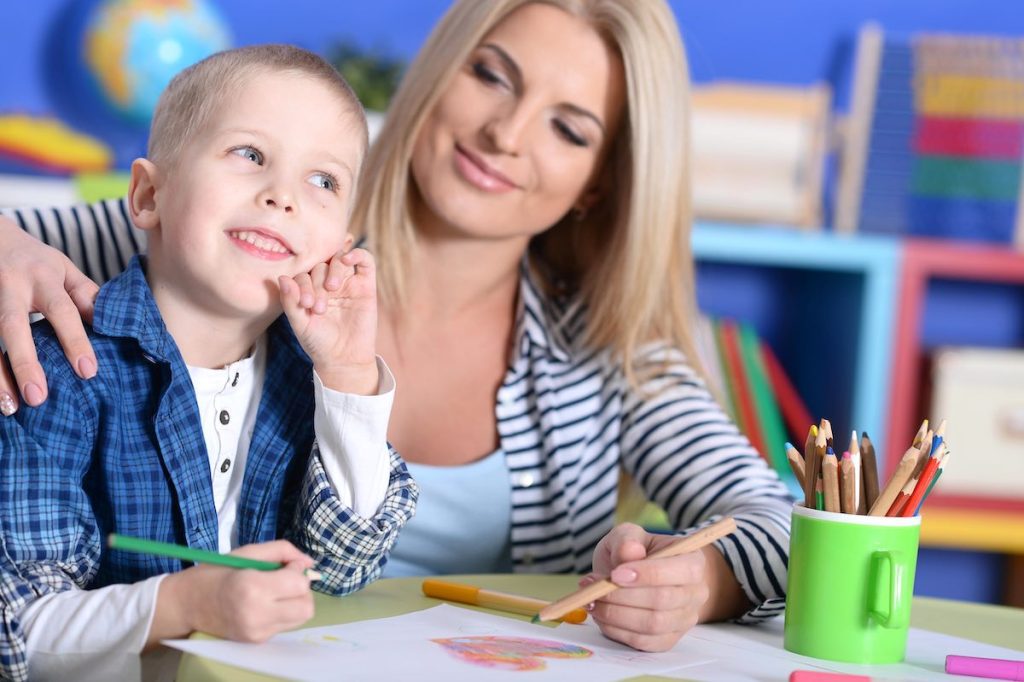
A drawing:
A child hands you a picture. Instead of automatically saying
“Wow, I’m so proud of your talent!”,
you might say:
“Look at all the colours you used! What do you like most about your drawing?” -
A sports loss:
A child loses an important game and starts to cry. Instead of dismissing their sadness or saying
“I’m not proud of the way you behaved on the field,”,
we can first acknowledge what they are experiencing:
“I can see that you’re disappointed. You really wanted to win. Let’s take a little time to breathe, and then we can look at what you learned from the game.”
What Can We Say Instead?
To help a child build a strong and unconditional relationship with themselves, we can gradually shift our language so that they learn to develop their own inner point of reference.
Here are a few alternatives to the traditional “I’m proud of you”:
- To acknowledge effort: “You put a lot of time and energy into that. You can feel good about what you did.”
- To acknowledge progress: “Do you remember how difficult this felt last week? Look how far you’ve come.”
- To encourage self-reflection: “What do you think about what you just did? Are you happy with it?”
- To welcome a mistake: “It didn’t work out the way you wanted. That’s frustrating. What could you try differently next time?”
- To reinforce unconditional love: “I love watching you learn. My love for you is here whether you succeed on the first try or the tenth.”
Learning to Become Your Own Ally
One of the greatest gifts we can give a child is not to teach them how to make us proud, but to help them develop a loving relationship with themselves.
To understand that their worth does not depend on their results, their performance, or other people’s approval.
They can learn to know themselves, welcome themselves, recognize their needs, and gradually become their own ally.
Then, in moments of success as well as difficulty, they can begin asking themselves:
“What do I think about myself? What do I need? How can I take care of myself right now?”
To go further:
Does My Worth Come From My Work? – Freeing Yourself Through Affective Autonomy
Would you like support in developing a kinder relationship with yourself and learning how to create more well-being from within?
I offer helping relationship sessions using an affective autonomy approach, online or in Longueuil.
View my Google profile and reviews
Renée Marc-Aurèle
Helping Relationship Therapist – Affective Autonomy
Vivre le bonheur
vivrelebonheur@videotron.ca

Why Learning Affective Autonomy is the Most Important Journey of Your Life
For generations, humanity has sought happiness outside itself. Discover why learning affective autonomy is the true key to building lasting happiness from the inside out. For a long time, many of us believed that happiness was a privilege reserved for a lucky few — a...

Anxiety and self-denigration | Victory process
Affective autonomy affirms that we are responsible for all of our needs throughout our lives. Our needs for security, encouragement, realism, understanding, acceptance, agency, etc. Therefore, a need that remains unresolved becomes a problem that causes affective...

Learn to love yourself in 3 steps | The Victory Process
Affective autonomy is like a parent-child relationship. Our beliefs acquired in childhood are sometimes harmful and immature. We must therefore become aware of our mental nourishment in order to parent ourselves and to bring logic to our perceptions. To go from...

Renée Marc-Aurèle | Helping-Relationship Therapist in Longueuil – South Shore
Happiness can be learned. It does not come primarily from what we have, what we do, or how others see us. It is built from within, through the way we think, speak to ourselves, and treat ourselves. In the Affective Autonomy approach, happiness grows from a mind that...

Affective Autonomy: Creating Happiness from Within
Love heals, while lack of love, judgment, childish expectations and irrational thinking can undermine my happiness here and now. Happiness grows from love and from a loving mind. If I do not learn to love myself and nurture my willingness to create my own happiness,...

Affective Autonomy: Creating Happiness from Within
Emotions are innate. From birth, a baby has no other way to communicate than through emotions. They are part of a guidance system that helps human beings respond to their basic needs for survival. Through emotion, a child lets a parent know whether their needs are...
Affective autonomy or the art of happiness
Affective autonomy is a way of life. It starts from the principle that the goal of all human life is happiness. And true happiness comes from our way of thinking repeated since our childhood. How do we know if what we think helps or hurts us? Emotions The human body...